
A small law office is often a labor of love. Most attorneys who hang a shingle do so not because it was their only option, but because they want the freedom, responsibility, and fulfillment that comes from building something of their own. Whether the office is in a small town, a suburban office park, or a downtown suite, running a law practice gives an attorney an experience many of their classmates will never have: the chance to be both lawyer and business owner.
That kind of independence attracts doers. Small law offices are often built by people who are capable, driven, and willing to take on whatever needs to get done. That instinct is part of what makes these firms work. But it can also become one of the biggest pressures on the business.
Keeping expenses low is important, especially in the early years or during slower periods. But cost-cutting can create its own set of problems when attorneys start taking on work that pulls them away from practicing law. Time spent doing billing, bookkeeping, reporting, marketing, or trying to learn new digital tools is time not spent serving clients, preparing cases, developing referral relationships, or simply protecting the energy needed to sustain the practice over time.
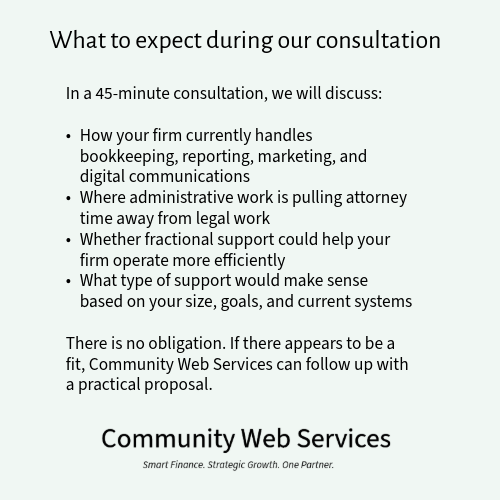
Running a law firm should not mean doing bookkeeping, marketing, and reporting after hours. Schedule a free 45-minute consultation with Allen Hutson to talk through where you firm may need support.
In many small firms, that work does not even happen during the normal workday. It gets pushed into nights and weekends, turning an already demanding profession into something even harder to manage. Over time, that creates more than inefficiency. It creates fatigue, burnout, and decision-making that becomes more reactive than intentional.
At the same time, the path to getting help is not always simple. Hiring full-time support sounds appealing, but it can be expensive and difficult to structure well. The range of skills a small law office may need — bookkeeping, reporting, content support, digital communications, marketing coordination, and analytics — rarely fits neatly into one affordable hire. Managing multiple outside vendors can be just as frustrating. Instead of reducing pressure, it can create more coordination, more follow-up, and more time spent trying to hold together disconnected pieces.
That is why Community Web Services takes a partnership approach. The goal is not to sell a law office one isolated service at a time. The goal is to provide practical, fractional support that helps the business run more effectively. That might include bookkeeping and reporting support that helps the firm stay organized and actually use its financial information. It might include marketing and communications support that helps the firm present itself professionally and reach the right audience without the attorneys having to become advertising specialists themselves. It might include analytics and decision support that help the firm better understand what is working and where to focus next.
The point is not just to outsource tasks. It is to create space for attorneys to spend more of their time where it creates the most value.
The purpose of doing the books is to better understand the business. The purpose of marketing is to connect with the right clients. The purpose of reporting and analytics is to make better decisions. But when attorneys are the ones trying to do all of that work themselves, they often lose the very benefit those functions are supposed to provide.
A small law office does not always need more complexity. Often, it needs the right support at the right level. Community Web Services is built to provide that support in a way that is connected, practical, and affordable for growing firms.
This may be a fit if your firm:
- Is a solo or small law office
- Has steady work but inconsistent business systems
- Wants help with bookkeeping, reporting, marketing, or basic analytics
- Feels like too much business-side work falls on the attorney
- Wants practical support without hiring a full internal team
- Needs more clarity before investing more in marketing
Start with a conversation
If your firm is growing, stretched thin, or simply trying to get more organized, the first step is a conversation.
Schedule a free 45-minute consultation with Allen Hutson, founder of Community Web Services. We will talk through your current setup, where your time is being pulled away from legal work, and whether fractional support could help your firm operate more effectively.